How to Choose a Think Car Scanner for Vehicle Diagnostics

There are many electronic systems in today's vehicles that assist in controlling the engine, safety, transmission operations, and other systems.
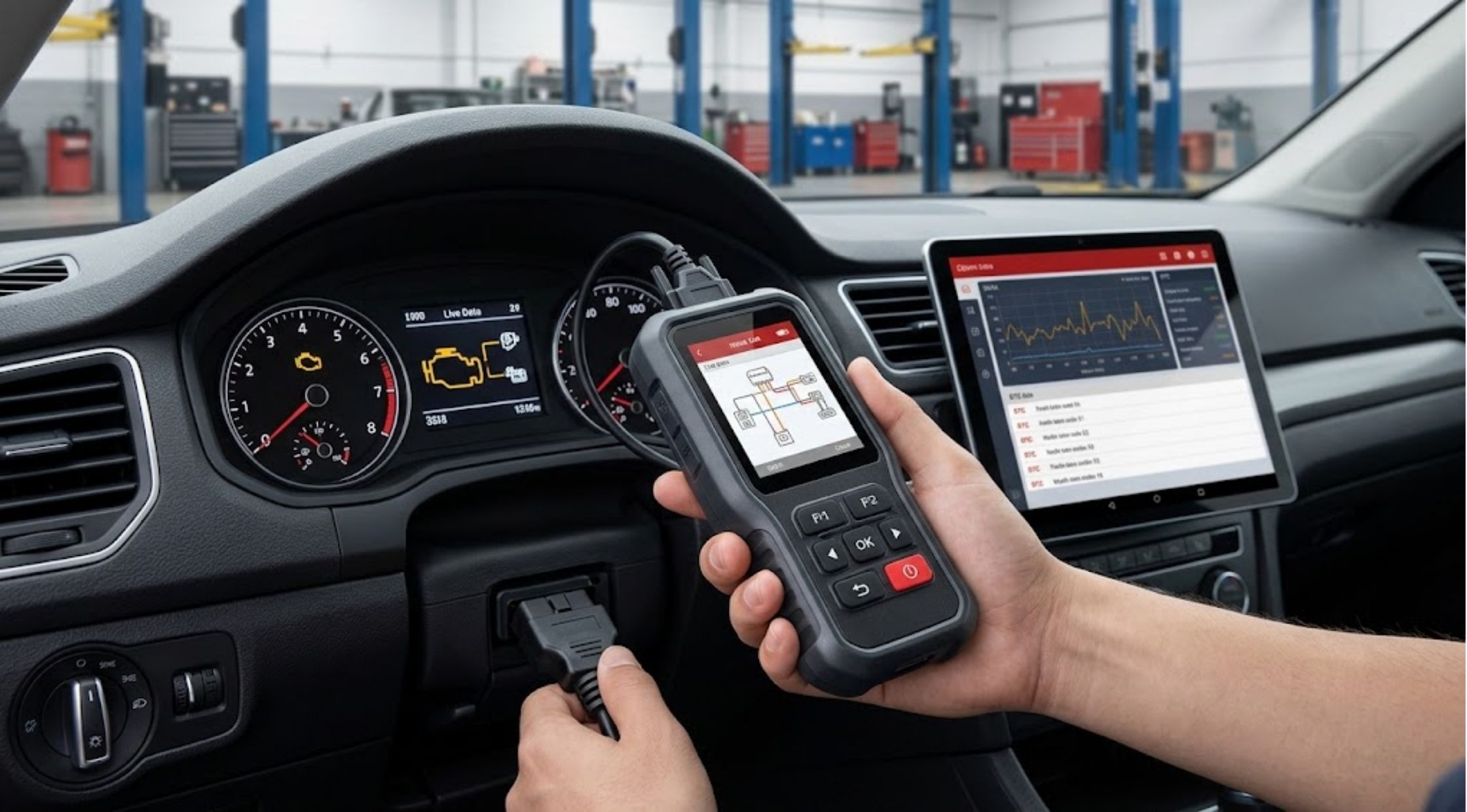
There are many electronic systems in today's vehicles that assist in controlling the engine, safety, transmission operations, and other systems. If the warning light is on, a diagnostic scanner will help determine the possible problems and give some information that can be helpful for further diagnostics.When you are researching a Think Car scanner, comparing a NUCAR scanner or even looking at the MUCAR BT200 Max you should know how automotive scanners work, or else you won't be able to select the perfect diagnostic tool to suit your needs.
1. Car Diagnostic Scanner – What You Must Know
A car diagnostic scanner is a device that is used to retrieve information from the electronic control modules in a vehicle. It can read diagnostic trouble codes, show real-time data, run tests on the system, or offer more service capabilities depending on the scanner and vehicle.
Simple scanners typically scan for issues that are common to most engines, and advanced scanners are able to probe into many vehicle systems.
Important Factors to Consider:
- Vehicle compatibility
- Supported diagnostic systems
- Code-reading capabilities
- Live data
- Service functions
- Software updates
- Connectivity options
2. Selecting a Think Car Scanner & How a Car Scanner Works
Selecting a Think Car Scanner
First, when looking for a Think Car scanner, determine what cars you will be diagnosing.
Check the scanner's compatibility with the make, model, year, and engine of your vehicle. Some diagnostic functions may be compatible in different vehicles; this should be checked prior to purchase.
One other factor you should also take into account, is how often you will be using the device. For occasional do-it yourself troubleshooting, a basic type of scanner might be sufficient, but for regular auto maintenance, an advanced scanner will be beneficial.
How a Car Scanner Works
The majority of OBD2-compatible scanners are plugged into the vehicle's diagnostic port.
General Procedure:
- Find the OBD2 connector.
- Connect the scanner.
- Follow the manufacturer's instructions to start the ignition.
- Choose the right information about the vehicles.
- Run a check-up scan.
- Check out the error codes that areavailable.
- Find out the cause and what this may be due to.
A diagnostic code doesn't necessarily mean that the named component has failed. It generally prompts further investigations.
3. Selecting NUCAR & MUCAR BT200 Max Models
How to Choose a NUCAR Scanner
The selection of a scanner for NUCAR can be narrowed down by considering the following:
For those drivers and do it yourself mechanics who wish to try out a diagnostic tool to aid them with their vehicle troubles, a NUCAR scanner can be taken under consideration.
When comparing models, don't just take the brand into account; check the model's functions.
Look at what you need to read the code or if you need more sophisticated functions like live data, system diagnostics, service functions, and more vehicle coverage.
Don't forget to take a look at the user interface and display. A scanner that displays information in a clear and easy to understand manner can be helpful in troubleshooting, especially for those not professional technicians.
How to Choose the MUCAR BT200 Max
One of the other tools to investigate is the MUCAR BT200 Max.
Ensure that before buying the product that it covers the model vehicle and any functions. Take into account its functionality in comparison to the kind of diagnostics that you are looking for.
When purchasing a scanner for a particular vehicle, make sure that it is compatible before adding to the cart. The features of a scanner may differ among models, so please don't assume that an MUCAR model has the same features as another.
4. Check Engine Diagnostics, Live Data, & Compatibility
How to Diagnose a Check Engine Light
A scanner can be used to help you start to check out a check engine light.
Plug in and get the stored diagnostic trouble code. Record the code before clearing the code.
Then find out what the code means and what might be the cause(s). Further testing might be required, depending on the problem.
Don't change a component just because it has a code. The diagnostic code can indicate a system or condition but not necessarily the specific part that is the cause of the failure.
Learn How to Use Live Data
Understand how to use Live Data.
A number of automotive scanners can display real-time data from the vehicle sensors and control modules.
Live data can be used to see how some of the parameters are changing during the running of the vehicle.
If this is a feature your scanner has, read from the available readings and compare the readings with an appropriate diagnostic information for your vehicle.
As with all data, live data values can vary from vehicle to vehicle and from condition to condition, and should only be interpreted with the help of reliable vehicle specific values.
How to Check Scanner Compatibility
Please consult the manufacturer's compatibility before purchasing any scanner.
Compatibility Checklist:
- Vehicle make
- Model
- Model year
- Engine
- Supported systems
- Required connection type
- Software or app that can be used.
When working on several vehicles, more compatibility becomes more important than other features of certain vehicles.
5. Safe Operation, Maintenance, & Brand Comparison
Ways to Safely Operate a Scanner
The diagnostic scanners are easy to connect in general, but should be used with care for advanced functions.
Follow the manufacturer's instructions when performing functions like coding, resets, adaptations or services.
Never remove the scanner from the procedure unless instructed to do so.
If you don't know what an advanced diagnostic operation is, you may need professional help to avoid any potential issues.
Keeping a Car Scanner
Keeping a car scanner is pretty easy. Maintaining a car scanner is not very difficult.
Your diagnostic equipment can be preserved by suitable storage.
Ensure that the scanner and the cables are not harmed by excessive heat, moisture or physical damage. Don't wrap cables around connectors.
If the device relies on an application/firmware update, ensure that the application is kept up to date by following the manufacturer's guidelines.
Use appropriate method to clean the scanner; do not bring electronic components in contact with liquids.
NUCAR Scanner vs. Think Car Scanner
|
Brand / Model |
Core Focus |
Key Comparison Factors |
|
Think Car Scanner |
Full-System DIY & Pro Diagnostics |
Multi-system coverage, advanced service functions, live data |
|
NUCAR Scanner |
DIY Driver Troubleshooting |
Display clarity, user interface, essential code reading |
|
MUCAR BT200 Max |
Targeted Diagnostic Features |
App-based interface, model coverage, specific function support |
Consider the NUCAR Scanner vs. Think Car Scanner and see if it makes sense to you.
Don't simply opt for a NUCAR scanner over a Think Car scanner—look at the particular model.
Check out coverage, diagnostics, live data, service features, software updates, ease of use and cost.
The ideal choice is the one that fits the vehicles and diagnostics that you really need.
If the functions it supports and the vehicles it can cover are the same as you need, there's no harm in adding the MUCAR BT200 Max to the mix.
Final Thoughts
A diagnostic scanner is a useful vehicle diagnostic tool to help understand vehicle warning lights and electronic system information.
The selection of a Think Car scanner, NUCAR scanner, or MUCAR BT200 Max should begin with the level of compatibility, then diagnostic capabilities, ease of use, software support, and use.
Keep in mind that diagnostic codes are hints and do not provide a self-diagnosis. The ability to provide the proper testing and vehicle-specific information is still a critical element to the identification of the root cause of a problem.
By employing the proper scanner and a systematic diagnostic strategy, do-it-yourself vehicle diagnostics can be organized and more informative.