How to Choose Bluetti Solar Panels & Use the Bluetti EB70

Selecting the appropriate solar panels and portable power station for Bluetti can be quite a task.
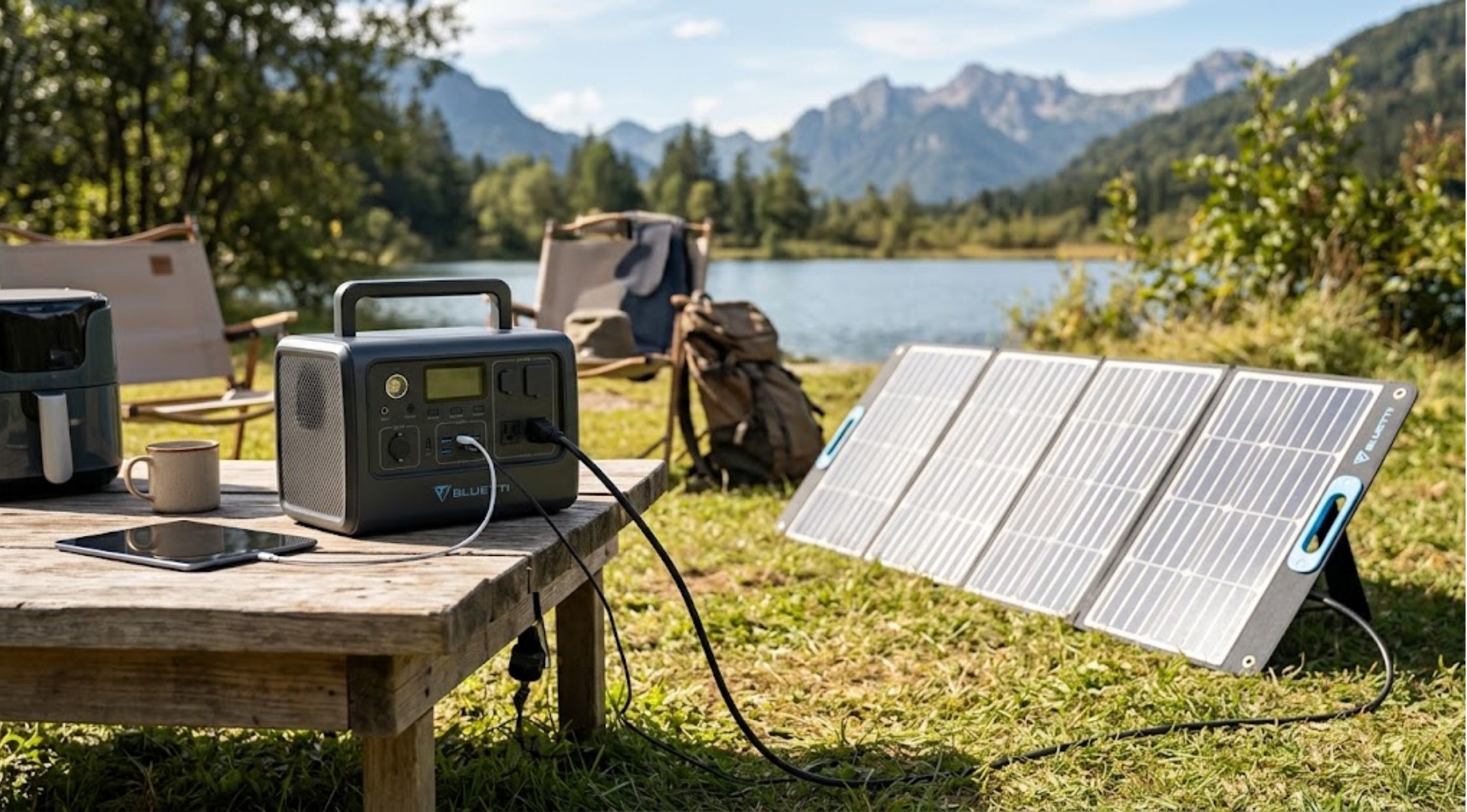
Choosing the right Bluetti solar panels and portable power station can be challenging. Selecting the appropriate solar panels and portable power station for Bluetti can be quite a task.
Portable power stations are now a viable option for camping, “back-up power” and travel. They can be used in combination with solar panels to create a convenient charging opportunity without having to completely depend on a regular electrical outlet.
Whether you are studying Bluetti solar panels, pondering whether you may use the Bluetti EB70, or wanting to understand what the wattage on an air fryer means, understanding how this system works can assist you in planning your setup.
1. How Do Bluetti Solar Panels Work?
The Bluetti solar panels harness sunlight and transform it into power to charge compatible portable power stations.
The output of the panels is influenced by a number of factors such as panel capacity, light levels, weather, panel orientation and shading.
Ideally, the panels should be placed in such a way that they will obtain direct sunlight for the greatest portion of the day possible.
Prior to the purchase, make sure the output and connectors of the panel are compatible with the power station.
2. How to Choose & Position Bluetti Solar Panels
How to Choose Bluetti Solar Panels
First, find out the amount of power required and which power station you will be using, the Bluetti power station.
Key Factors to Consider:
- Solar panel wattage
- Compatibility
- Connector type
- Panel size
- Portability
- Charging requirements
- Available sunlight
The power station's solar input limits will also need to be taken into account, but a higher wattage panel could potentially charge more power under appropriate conditions. Check the manufacturer's specifications for panel to panel connection before making connections.
How to Position Solar Panels
The placement of solar panels can significantly impact charging efficiency.
Position the panels in a location that is not in the shade of any trees, buildings or other structures. If possible adjust the angle so as to have strong direct sun on the panels.
The electricity generation can drop as a result of clouds, dust and the movement of sunlight during the day. If using portable systems, it is important to consider moving the panels periodically throughout the day to take advantage of the varying sun's position.
3. How to Choose & Use a Portable Power Station (Bluetti EB70)
How to Use the Bluetti EB70
The Bluetti EB70 is a portable power station that can be used to power compatible devices and appliances. Please check device's capacity, output limits, input options and acceptable connections before you use it.
Fundamental Step-by-Step Process:
- Refuel/Charge: Refuel/Charge the power station.
- Connect: Connect the device, as necessary.
- Power On: Turn on the appropriate output.
- Monitor: Check the power station's meter.
- Disconnect: Unplug device when not in use.
Safety Warning: Do not connect equipment with output greater than the station's rated output.
How to Choose a Portable Power Station
The size of the batteries is not the only aspect to consider when comparing portable power stations.
Evaluation Checklist:
- Battery capacity
- Continuous output
- Peak output
- AC outlets
- USB ports
- Solar input
- Recharge time
- Weight
- Portability
Consider the equipment that you will run. A small power station can run phones and laptops, larger appliances can need significantly more power.
4. Calculating Power Needs & Running High-Draw Appliances
The Calculation of the Power Needed to Run Various Appliances
If you want to use a portable power station, it is essential to know the power needs of your appliances. Refer to the appliance label or manufacturer's specifications for the appliance's rated wattage.
If an appliance requires 1000 watts, the power station must be able to deliver that amount of power at all times. There are also some appliances that may have a higher startup or peak power demand; so it is important to take into consideration both continuous and peak output requirements.
What Is The Wattage Of The Air Fryer?
The number of watts in an air fryer is the amount of electrical energy that the fryer consumes during operation. Different models can have different power requirements. Before connecting an air fryer to a portable power station, check the wattage listed on the air fryer's label or specifications.
This is especially true for cooking appliances, which can use significantly more power than smaller devices like phones or laptops.
Running an Air Fryer With a Portable Power Station
Using an Air Fryer With a Portable Power Station is a great way to get delicious food while traveling.
When plugging in an air fryer, be sure to check how many watts it is rated for against the continuous AC output of the power station. Don't connect the air fryer if it draws more power from the station than it can safely use.
Keep in mind the amount of time you will be using the appliance. Battery capacity is used to indicate the amount of energy that is available, and output rating is used to indicate whether or not the station is capable of running the appliance at all. If using the power station for a longer period of time, keep checking the remaining battery charge.
How to Estimate Battery Runtime
One simple method for estimating energy use is to simply multiply the appliance's wattage times the amount of time it is used.
For instance, if the appliance has a power rating of 1000 watts and is used for 1 hour, it would use roughly 1,000 watt-hours (before loss of conversion). Actual runtime may be shorter due to the inefficiency of portable power stations and the fact appliances do not necessarily run at their rated wattage.
5. System Integration & Maintenance
Combining Solar Panels with a Power Station
Power stations and solar panels can be combined together in the following way. Here are the ways to combine solar panels with a power station.
A solar power system can be used in a portable power station to increase the amount of energy that can be used. Follow the instructions to connect the compatible solar panels and keep an eye on the solar charging input.
When camping or when power outlets are scarce, solar charging can be very beneficial. But remember that the sun is not always as bright as it can be so assume nothing.
Key Metrics Comparison Table
|
Metric |
Role / Function |
Key Consideration |
|
Battery Capacity (Wh) |
Indicates total energy available |
Determines overall runtime for connected devices |
|
Output Rating (W) |
Indicates maximum power delivery |
Determines if an appliance can run at all |
|
Continuous Output |
Constant power supply limit |
Must match/exceed appliance rated wattage |
|
Peak / Surge Output |
Short-term power surge capacity |
Handles initial motor/heating element startup |
|
Solar Input Limit |
Maximum solar charging intake |
Controls maximum speed of solar recharging |
Maintenance Tips for Portable Power Stations:
- Store power station in an appropriate dry location and avoid excessive heat, moisture and physical damage to the power station.
- Regularly check cables and connectors.
- Maintain clean solar panels and remove any unnecessary obstructions.
- Always store, charge, and maintain batteries according to manufacturer's guidelines to help ensure better battery performance.
Final Thoughts
A portable power station can offer handy flexibility to back up your power supply at home, camp or travel, or to power anything outdoors.
Be sure to check the specifications and connectors of the Bluetti solar panels when conducting research. When thinking of the Bluetti EB70, compare the output and input of the power source with the devices you intend to power.
When it comes to cooking appliances, it's crucial to understand the air fryer wattage as well because electrical requirements can be quite higher than the normal electrical appliances.
Learning how to estimate the power needed and verify compatibility, along with solar charging conditions, can help create a more viable and reliable portable power solution.