How to Choose the Best Dog Beds for Large Breeds & Pitbulls

It's easy to see that large breeds require a comfortable bed to sleep on, but it can be difficult to decide on which one to buy.
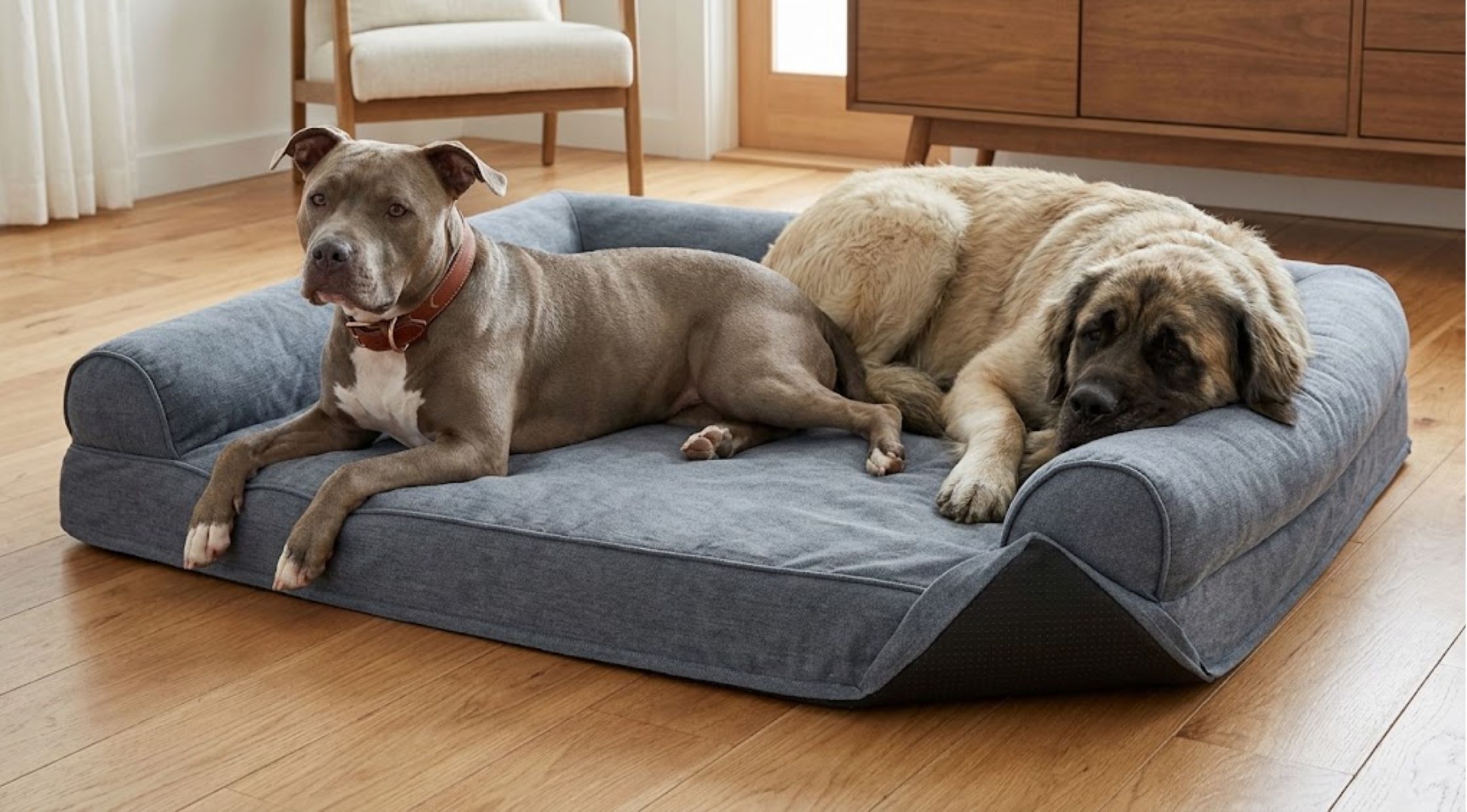
It's easy to see that large breeds require a comfortable bed to sleep on, but it can be difficult to decide on which one to buy. They have different sizes and weights, they sleep a lot, and they are very active—all factors that influence their required level of support. The ideal dog bed is durable, easy to clean, and offers enough room for full relaxation.
Whether you are looking for the best bed for your pit bull or a heavy-duty option for an extra-large breed, knowing key bed features ensures you make the right investment for your dog's long-term health.
Selecting an XL Orthopedic Bed for Pitbulls and Large Dogs
How to Choose an Orthopedic Dog Bed XL
If your dog is a larger breed, an orthopedic dog bed XL may be a good choice if they require extra padding and joint support. Orthopedic beds are typically constructed with high-density supportive foam or layered memory foam that evenly distributes a dog's weight.
Key Selection Factors:
- Overall bed dimensions vs. usable sleeping area
- Mattress thickness and density
- Foam construction (solid orthopedic foam vs. shredded memory foam)
- Cover material and durability
- Manufacturer weight capacity
- Ease of cleaning and machine washability
- Your dog's preferred sleeping position
Sizing Rule: Measure your dog from nose to tail while they are fully stretched out, then add 2 to 4 inches to determine the minimum required bed length.
[Nose-to-Tail Length] + [2–4 Inches Allowance] = [Minimum Bed Dimension]
Choosing the Best Bed for Pitbulls
Pitbulls are active, muscular dogs, which is why the bed you choose must be supportive and sturdy enough to withstand their natural energy and weight distribution.
Pay close attention to how your Pitbull uses their sleeping space. Dogs that sleep curled up require different bed shapes than those that stretch out completely or shift frequently during the night.
Essential Pitbull Bed Features:
- Supportive, dense cushioning to cushion heavy joints
- Reinforced double-stitched seams
- Heavy-duty, chew-resistant fabric (e.g., ballistic nylon or thick canvas)
- Non-slip rubber bottom to prevent sliding on hardwood floors
- Removable, machine-washable cover
- Precision sizing tailored to their muscular frame
Behavioral Tip: Dogs that scratch, dig, or nest before lying down benefit significantly from beds with reinforced covers and concealed zippers.
Sizing, Material, and Durability Selection
How to Measure Your Dog Correctly
One of the most crucial aspects of purchasing a dog bed is picking the correct size. Never assume that "Large" or "XL" sizing is standardized across different brands.
Measurement Steps:
- Observe your dog in their natural sleeping state (on their side, back, or stomach).
- Measure from the front of their body/nose to the back of their body/tail.
- Add a few extra inches of clearance to ensure they aren't crowded by the edges.
- Stretchers vs. Curlers: Focus primarily on total length if your dog stretches out fully. Dogs that prefer curling up can use a slightly more compact, bolstered bed style.
Choosing the Right Bed Material
Match the bed material to your dog's physical habits and your preferred cleaning routine:
- High-Density Foam: Offers maximum orthopedic support for heavy joints and older dogs.
- Plush/Polyfill Cushioning: Provides soft, cloud-like nesting for lighter dogs or those without joint issues.
- Hybrid Layers: Combines a dense foam base with a soft top layer for balanced comfort and support.
Selecting a Durable Bed for Active Dogs
Durability is critical for active breeds. Inspect the overall build quality before purchasing:
- Look for heavy-duty covers, reinforced seams, and hidden zipper enclosures.
- Ensure the inner mattress maintains its structural shape over time without flattening or sagging in the center.
- Note: No fabric bed is completely indestructible—monitor active chewers regularly and replace bedding if damaged.
Maintenance, Placement, and Replacement
Maintaining and Cleaning Large Dog Beds
Over time, large beds accumulate pet hair, dirt, dander, and odors. Routine cleaning extends the lifespan of the mattress and keeps your home fresh.
Cleaning Checklist:
- Weekly: Vacuum or brush the outer cover to remove loose hair and dirt particles.
- Monthly: Remove the outer cover and wash it according to the manufacturer's care instructions.
- Multi-Pet Homes: Increase wash frequency to manage higher dirt and odor accumulation.
Creating the Ideal Sleeping Environment
The location of the bed is just as important as the bed itself:
|
Factor |
Ideal Environment |
Avoid |
|
Traffic Level |
Quiet, low-traffic corner |
High-traffic hallways or doorways |
|
Temperature |
Well-ventilated in summer; warm in winter |
Direct sun exposure or cold, drafty vents |
|
Family Connection |
Near living areas so the dog feels included |
Isolated, cold basements or garages |
When to Replace Your Dog's Bed
Even high-quality beds eventually reach the end of their useful lifespan. Inspect your dog's bedding regularly for signs of wear:
Replace the mattress immediately if it sags under your dog's weight or if the supportive foam breaks down, as this can lead to joint pain in larger breeds.
Evaluating Specialized Options (Bully Beds)
When searching for heavy-duty options, specialized brands like Bully Beds are often considered for large and muscular breeds.
When evaluating Bully Beds or similar specialized manufacturers, review the exact specifications:
- Exact internal vs. external product dimensions
- Core foam density and thickness
- Joint support rating for heavy weights
- Fabric tear strength and water-resistance properties
- Warranty coverage against flattening
Selection Tip: Always evaluate specific product specs, foam density, and dimensions rather than relying solely on brand reputation.
Final Thoughts
Selecting a suitable bed for a large dog is about much more than picking the largest option on the shelf. You must carefully balance your dog's weight, sleeping style, activity level, and joint support needs.
An orthopedic dog bed XL provides crucial joint relief for aging or heavy breeds, while muscular breeds like Pitbulls require reinforced durability, tear-resistant fabrics, and strong seams. By measuring your dog accurately, selecting easy-to-clean materials, and placing the bed in a quiet, temperature-controlled space, you ensure your pet enjoys a comfortable, supportive place to rest for years to come.